'%3e%3crect%20x='5'%20y='5'%20width='16'%20height='16'%20rx='3.6'%20fill='%23151A21'/%3e%3crect%20x='43'%20y='5'%20width='16'%20height='16'%20rx='3.6'%20fill='%23151A21'/%3e%3crect%20x='5'%20y='43'%20width='16'%20height='16'%20rx='3.6'%20fill='%23151A21'/%3e%3crect%20x='43'%20y='43'%20width='16'%20height='16'%20rx='3.6'%20fill='%23151A21'/%3e%3crect%20x='24'%20y='24'%20width='16'%20height='16'%20rx='3.6'%20fill='%23FF5A1F'/%3e%3c/g%3e%3c/svg%3e)
Tasks we are deploying today
We specialise in industrial robots for repeatable tasks. These four are the ones we know best and the ones that reach production fastest. If your process is one of a kind, we'll tell you at the assessment instead of selling it to you.
Palletizing and stacking
The end of the line at a sugar mill, a cement plant, a flour mill, a fertiliser producer or a bottling plant: 42 to 69 kg sacks, shrink-wrapped packs or boxes that someone lifts, turns and stacks onto a pallet, eight hours a day. It is the heaviest task on the floor, the one with the highest turnover, and the hardest to cover on the second shift. It is also the best fit for an arm: the movement is the same every time and the pallet pattern is fixed.
- What we measure: units per hour, weight, stack height and pallet pattern.
- Typical product: sugar, cement, flour, coffee, fertiliser, concrete block and beverage packs.
- Typical equipment: a high-payload palletizing robot with a sack gripper, vacuum end effector or pack gripper.
- A good sign: a single line, a single load format and a stable pallet pattern.
Robotic welding
Welds that repeat part after part: panels, serial structures, tank shell courses. Here the argument is not only the shift you cannot fill — an experienced welder is hard to hire, and their time is worth more on the work that requires judgement. The repetitive weld goes to the cell; the skilled work stays with your people.
- What we measure: weld length and position, part repeatability and volume per batch.
- Typical parts: panels, serial structures and tank shell courses.
- Typical equipment: welding arm with torch and dedicated fixturing.
- Programming: by manual teaching with a teach pendant, or offline CAD-CAM from the 3D model.
- A good sign: the same part in batches, with fixturing that positions it identically every time.
In-line pick & place
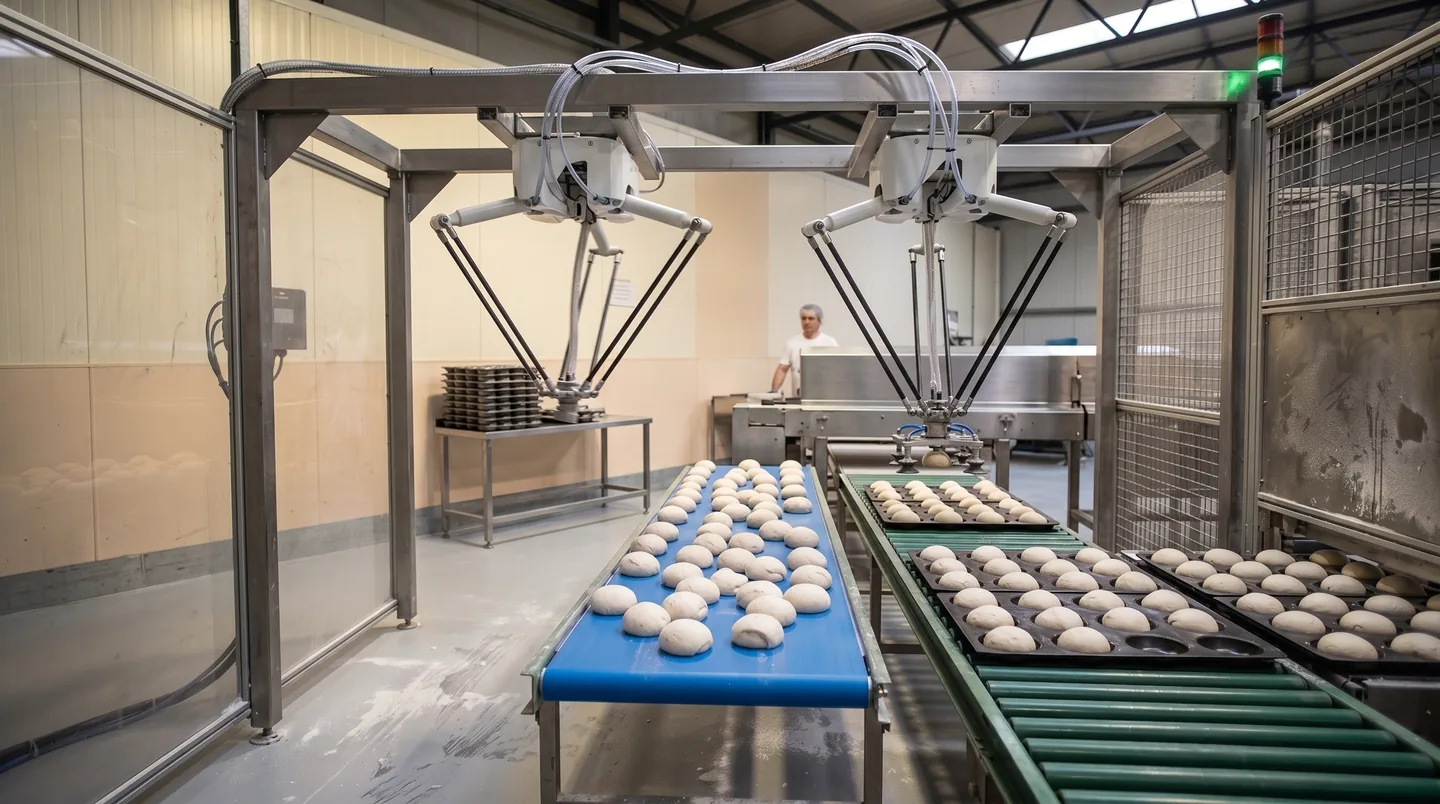
Take a part from one point and place it at another, thousands of times per shift, at the pace of the conveyor. It shows up on food, plastics and pharma lines. The problem here is not weight — it is consistency. A person can hold the rhythm for an hour; holding it for eight, shift after shift, is where errors and absenteeism appear.
- What we measure: parts per minute, travel distance and positional tolerance.
- Typical sectors: food, plastics and pharmaceuticals.
- Typical equipment: a fast, light-payload arm — or a collaborative robot (cobot) when the pace allows — with a vacuum cup or custom gripper.
- A good sign: consistent product shape and a repeatable infeed position.
Packing stations
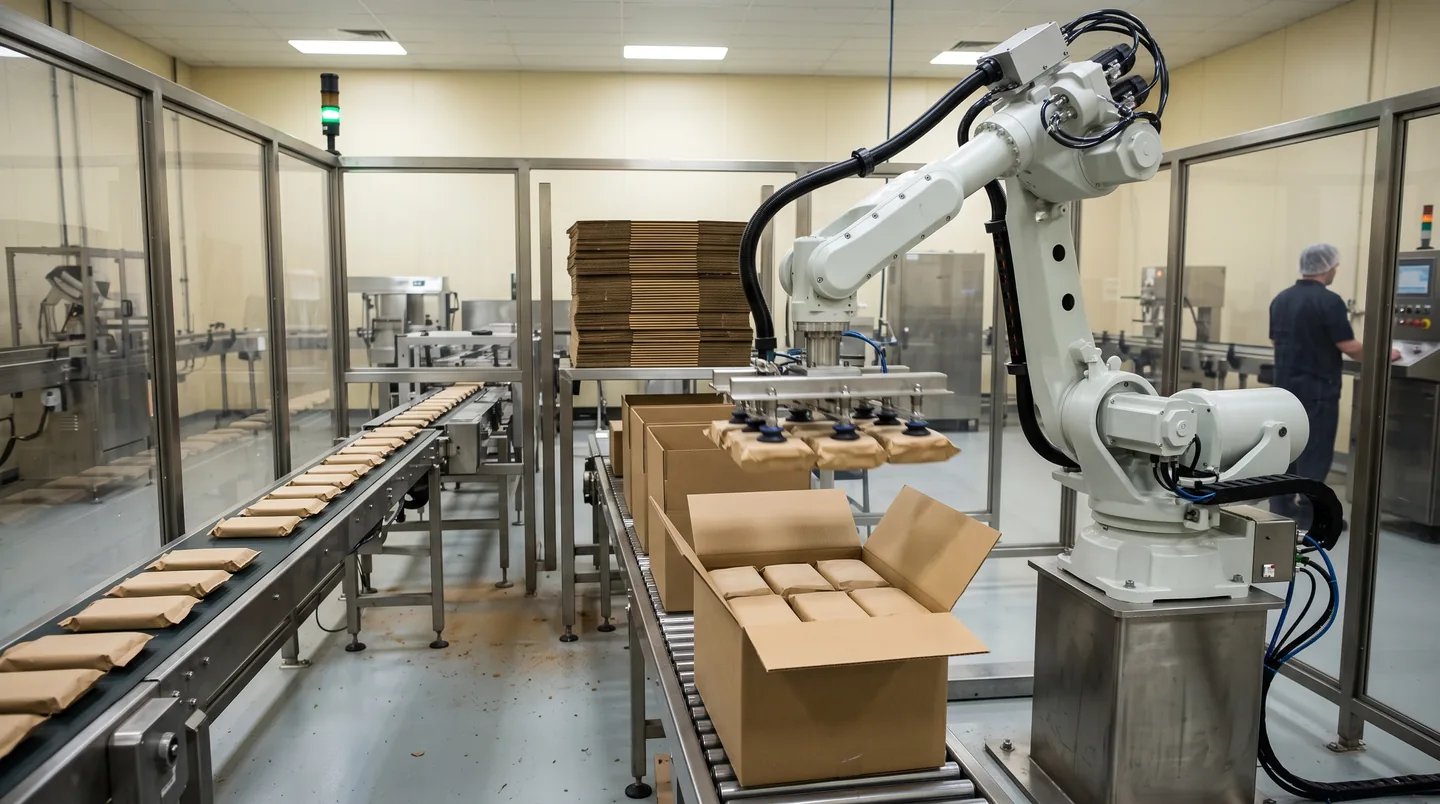
Arranging and boxing at the end of the line: ordering the product, placing it in the carton and leaving it ready to close. It is repetitive standing work paced by production, and it is usually the station with the highest churn. Robotized, the station stops depending on how many people showed up that day.
- What we measure: cartons per hour, units per carton and packing pattern.
- Where it shows up: end of line in food, beverage and consumer goods.
- Typical equipment: medium-payload arm with a multi-part end effector.
- A good sign: few carton formats and a defined packing pattern.
When we will tell you no
We would rather lose a sale than install a cell that will not work. These are the signals that make us stop during the assessment.
-
The task changes every week
If the product, format or pattern changes constantly, reprogramming eats the benefit.
-
The work requires human judgement
Quality inspection by judgement, selection by appearance, or decisions that depend on the case: that is not a robot's job.
-
The volume doesn't support a cell
If the task only runs a few hours a month, the fee has nothing to be measured against. We will show you that with the numbers in hand.
-
The layout doesn't allow it
Sometimes there is no room for the cell and its safety envelope without moving the line. If moving the line is not worth it, we say so.
'%3e%3crect%20x='5'%20y='5'%20width='16'%20height='16'%20rx='3.6'%20fill='%23151A21'/%3e%3ccircle%20cx='51'%20cy='11.2'%20r='7.1'%20fill='%23FF5A1F'/%3e%3cpath%20d='M45.60,14.40%20L56.40,14.40%20L51.00,22.60%20Z'%20fill='%23FF5A1F'%20stroke='%23FF5A1F'%20stroke-width='1.6'%20stroke-linejoin='round'%20stroke-linecap='round'/%3e%3crect%20x='5'%20y='43'%20width='16'%20height='16'%20rx='3.6'%20fill='%23151A21'/%3e%3crect%20x='43'%20y='43'%20width='16'%20height='16'%20rx='3.6'%20fill='%23151A21'/%3e%3crect%20x='24'%20y='24'%20width='16'%20height='16'%20rx='3.6'%20fill='%23151A21'/%3e%3c/g%3e%3c/svg%3e)